Ask any contractor where their last big job came from and the answer is usually a referral, a sign on the lawn, or a repeat client. But ask where the next ten jobs should come from, and the honest answer is Google — because that's where homeowners and GCs go first when they need a builder. That's why construction company website design matters: your website is the one piece of marketing that shows your work, builds trust, and books estimates while you're on the job site.
In this guide, we'll walk through the ins and outs of construction company website design — what separates a site that wins bids from one that just sits there — and then show you two real sites built on Vibe Otter: one designed for a contractor by our web design team, and one built by the contractor himself.
Why Your Website Is Your Best Salesperson
A construction company lives and dies on trust. Nobody hands a six-figure build to a company they found in a phone book — they check you out online first. If your site looks like it was thrown together in 2014, or worse, you don't have one at all, you're quietly losing jobs to competitors whose sites make them look bigger, sharper, and more established than you.
The good news: construction company website design isn't complicated once you know what actually moves the needle. It comes down to a handful of elements done well.
The Ins and Outs of Construction Company Website Design
1. A hero that says what you build — instantly
Visitors should know within two seconds what you do, where you do it, and what to do next. "Quality craftsmanship since 1998" is nice; "Custom home builder serving Central Pennsylvania — get a free estimate" is better. Pair it with a real photo of your work, not a stock image of a hard hat on a blueprint.
2. A project gallery that does the bragging for you
Construction is a visual trade. Your gallery is your single most persuasive asset — big, clean photos of finished projects, ideally with a line or two of context (scope, location, timeline). Before-and-after shots are gold. If your gallery is three blurry phone pictures, fixing that is priority number one.
3. Trust signals everywhere
Licensing numbers, insurance, certifications, years in business, warranties, and above all reviews and testimonials — these are the details that turn a browser into an estimate request. Sprinkle them through the site, not just on an "About" page nobody visits.
4. A quote request that takes 30 seconds
Every page should funnel toward one action: request an estimate. Keep the form short — name, contact, project type, message. Every extra field costs you leads. Put a "Get a Free Quote" button in the header and at the bottom of every page.
5. Local SEO baked into the structure
Contractors win locally, so your site needs your service area on every page, dedicated pages for your main services, and proper page titles like "Kitchen Remodeling in [Your City]." That's how you show up when someone searches for exactly what you do, where you do it.
6. Mobile-first, fast-loading
Half your visitors are standing in a kitchen they want remodeled, phone in hand. If your site loads slowly or the buttons are too small to tap, they're gone in a swipe.
That's the blueprint. Now let's look at two real companies that got it right — built two different ways.
Case Study 1: Blas Mechanical Services (Designed by Vibe Otter)
blasmechanicalservices.com
Blas Mechanical Services is a mechanical contracting company that needed a site as professional as its work — but like most contractors, the owner didn't have months to babysit a web project. So it went through Vibe Otter's web design service: we handled the design, the copy, the structure, and the polish.
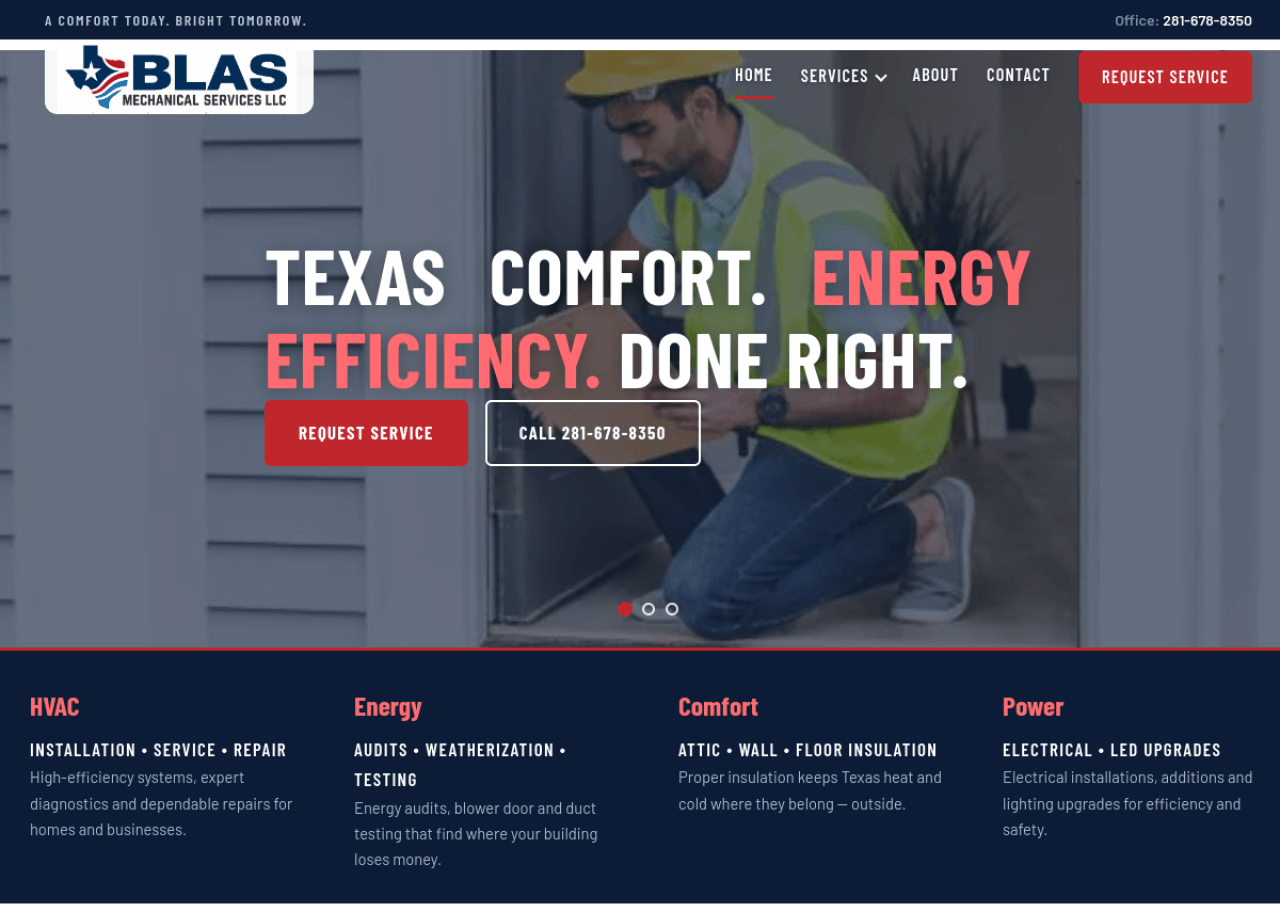
- Clear positioning up front. The homepage states the service and the audience immediately, so visitors know they're in the right place.
- Trust-forward layout. Credentials, service breakdowns, and contact paths are exactly where a facilities manager or homeowner expects to find them.
- Built to convert. Every section funnels toward getting in touch — no dead ends, no scavenger hunt for a phone number.
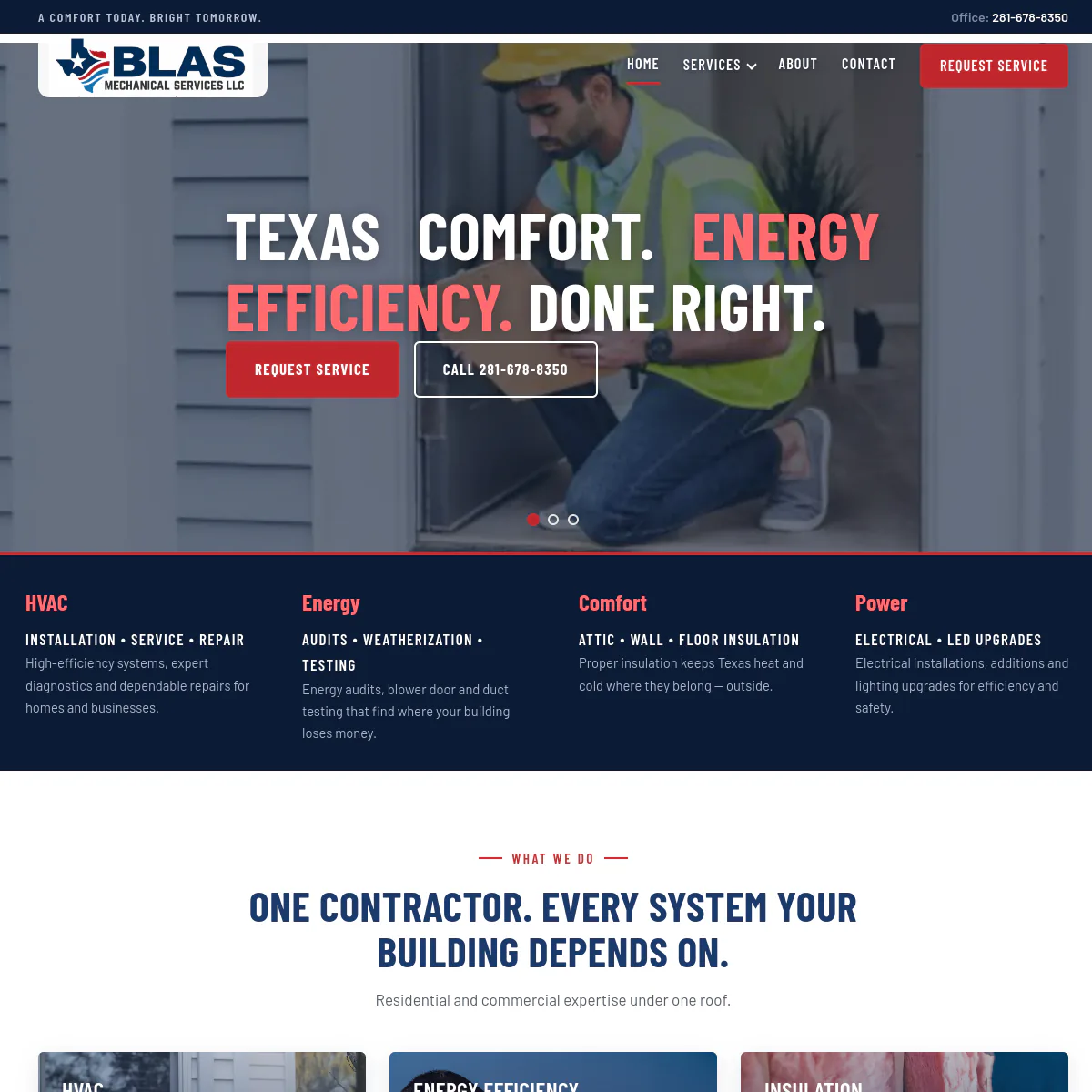
The result is a site that looks like a design agency spent weeks on it — because the process felt like a conversation, not a construction project. That's the done-for-you route: you describe the business, we build the site, you review and launch.
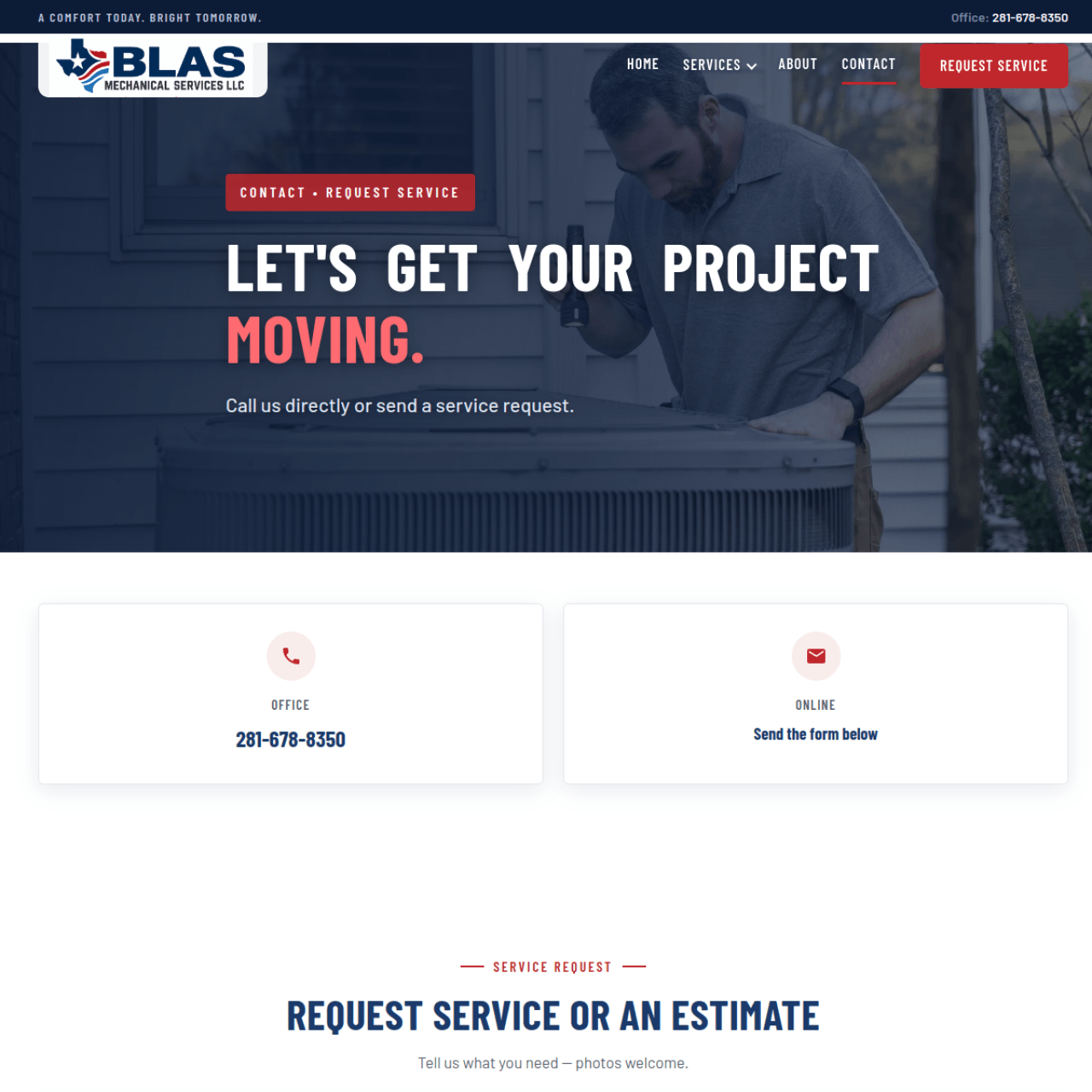
Case Study 2: Donley Construction (Built by the Contractor Himself)
donleyconstruction.org
Donley Construction took a different route: the contractor built his own site using Vibe Otter's DIY builder platform — the same AI-powered builder you can try with the bar below. No designer, no agency, no waiting on anyone's queue.
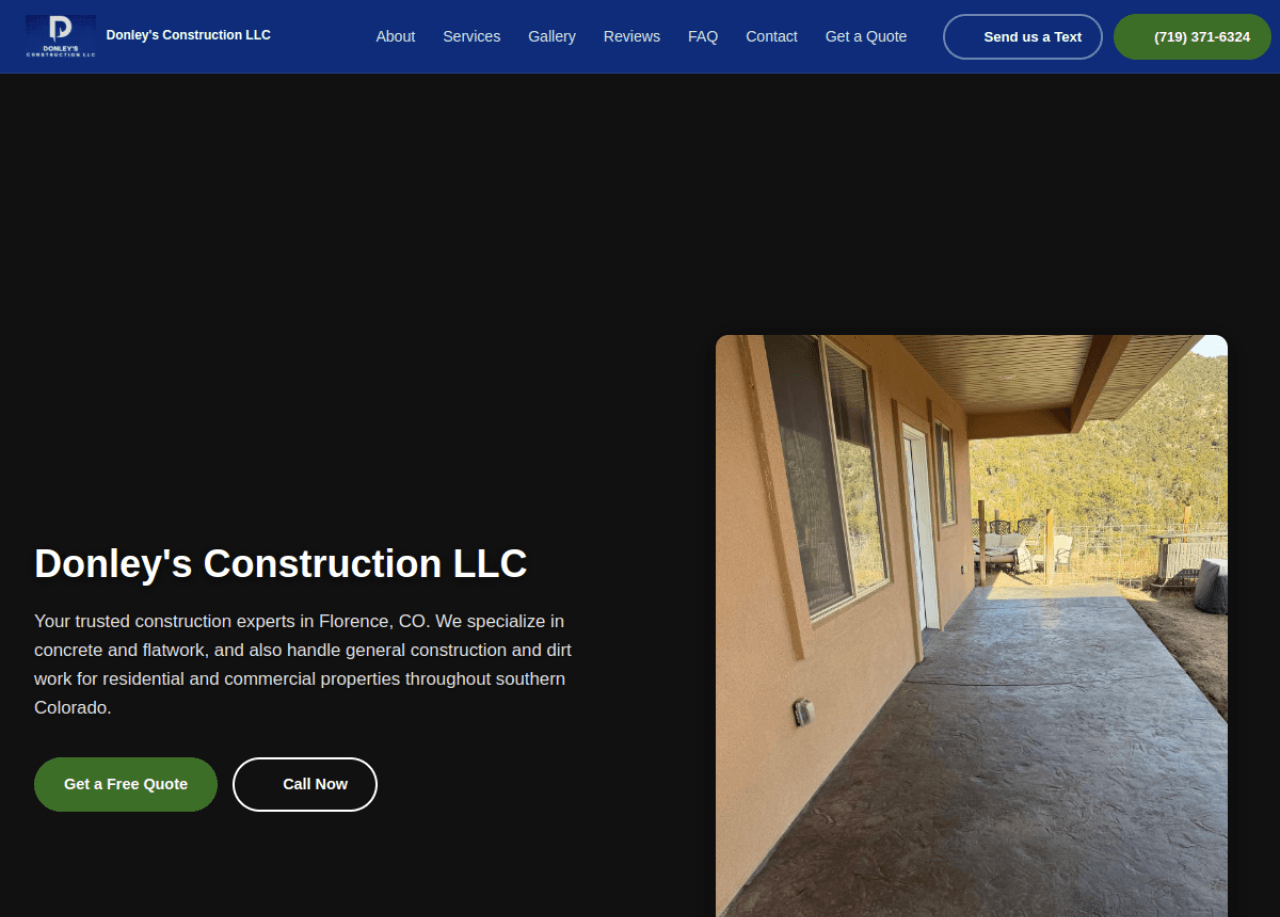
- His projects, his words. The site shows off the work the way only the person who did it can describe it.
- Built in an afternoon, not a quarter. He described his company in plain language, Vibe Otter drafted the site, and he refined it from there.
- Changes on demand. Finished a new project? It goes on the site the same day — no emailing a designer and waiting a week.

And here's the thing — you'd never guess he built it himself. It looks custom, because it is.
Why So Many Contractors Now Build Their Own
We find something interesting happens when contractors try Vibe Otter. A lot of them come in expecting to hand the whole thing off to our design team — and then, once they see how the builder works, they'd rather do it themselves.
It makes sense once you think about it: building a website with Vibe Otter isn't that different from building something physically. You start with a frame, you describe what goes where, you adjust as you go, and you can see the progress taking shape. Contractors already think in projects, materials, and revisions — Vibe Otter just speaks that language. You describe the site you want, it builds the first draft, and you refine it the same way you'd walk a job: look it over, call out what needs to change, and keep moving.
That's why you'll see both kinds of sites here — professionally designed ones like Blas Mechanical, and owner-built ones like Donley Construction. Both look custom. Both convert. The difference is just who held the tools.
Ready for a Website That Works as Hard as You Do?
Whether you want it built for you or you want to swing the hammer yourself, the destination is the same: a construction website with a hero that sells, a gallery that impresses, trust signals that close, and a quote form that fills your pipeline.
Two ways to get there — one platform
- Done-for-you: Vibe Otter Web Design builds your construction site for you, start to finish — like Blas Mechanical Services.
- DIY: Build it yourself on the Vibe Otter platform, like Donley Construction did — describe it, watch it get built, refine it by hand.
Either way, you end up with a custom site that makes your company look the way your work deserves. Start with Vibe Otter web design here — or try the builder above and see your first draft before lunch.
Your work wins the bids — but your website wins the shortlist. Get the construction company website design your craftsmanship deserves: talk to Vibe Otter about a custom build, or build the first draft yourself in the next three minutes.